Hiring a web designer or developer is a bit like hiring a builder for your office. The portfolio shows you what they can do. The questions you ask show you how they’ll work with you, what you’ll actually get and what happens when something goes wrong.
Most “questions to ask” lists stop at the questions. That’s the easy part. The hard part is knowing whether an answer is good.
So for each question below, you’ll see why it matters, what a good answer sounds like and which answer should make you pause. Because I’m a web designer and developer myself, I’ve also added how I answer each one. Hold me to the same standard.
Key Takeaways
- Ask to see live websites rather than screenshots. Find out who will actually do the work.
- Ask who writes the copy. It’s the part most quotes quietly leave out.
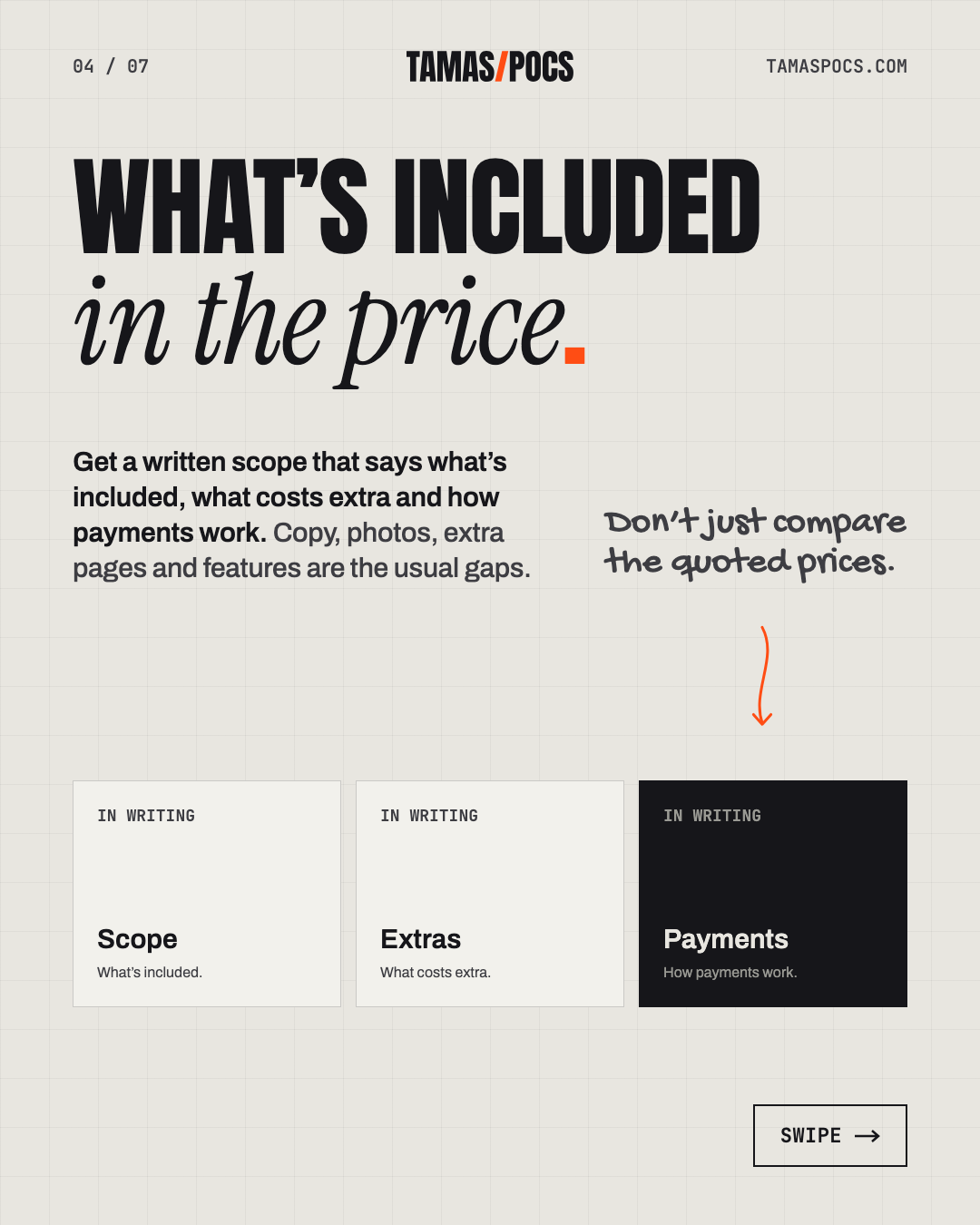
- Get a written scope that says what’s included, what costs extra and how payments work.
- Make sure you own the domain, the hosting account and the content.
- Ask what happens after launch. A website needs updates, backups and fixes for as long as it’s online.
Fit and Proof
Start by checking that the designer or developer has done work like yours and can show real results.
1. Can I see live websites you’ve built for businesses like mine?
Why ask: screenshots can be polished. Live sites show how the work holds up: on your phone, when you click around, when a page loads slowly.
A good answer: links to several live sites, ideally for service businesses similar to yours.
A red flag: only mockups or images, or no sites that are still online.
How I answer: I’ve built more than 50 websites over 5+ years. You can see recent projects on my homepage. I’m happy to send live links to the ones closest to your business.
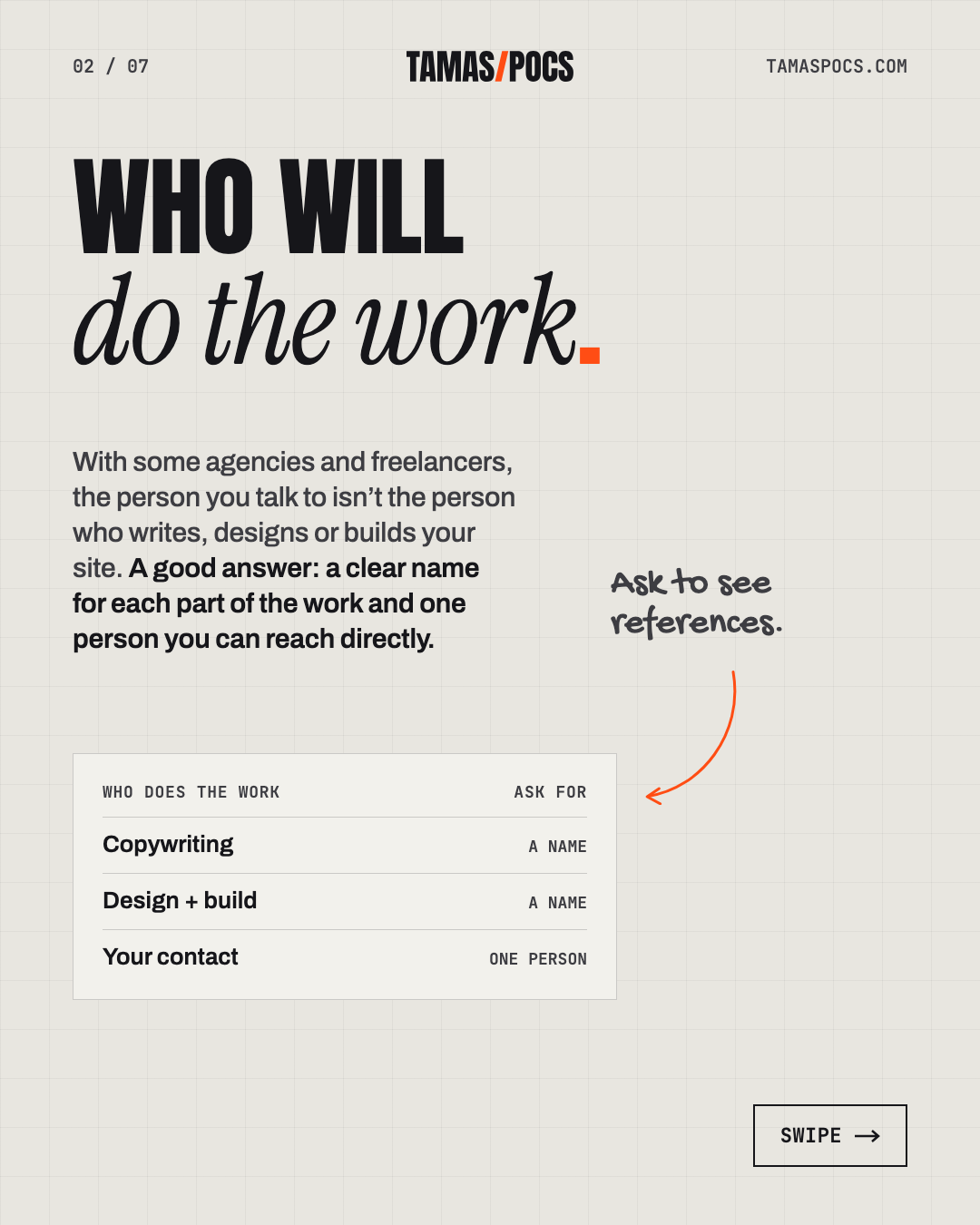
2. Who will actually do the work?
Why ask: with some agencies and freelancers, the person you talk to isn’t the person who writes, designs or builds your site.
A good answer: a clear name for each part of the work and one person you can reach directly.
A red flag: vague answers like “our team” with no names, or parts of the work passed on without telling you.
How I answer: me. I write the copy, design the site and build it myself, so nothing gets lost between specialists.
3. Can you show me a result from a past client?
Why ask: a beautiful site that brings no inquiries isn’t a good result. You want to know what the site did for the business.
A good answer: a concrete outcome, shared with the client’s permission.
A red flag: only talk of design awards or “modern, clean look”, with nothing about what changed for the client.
How I answer: Mrs. Kitty’s Pasta Cottage, a pasta-making workshop business, gets about 95% of its registrations through the website I built.

Process and Copy
How the project runs decides how smooth it feels. It also decides whether the finished site actually says the right things.
4. What’s your process, step by step?
Why ask: a clear process means fewer surprises, fewer delays and fewer redesigns halfway through.
A good answer: named stages in a clear order, with what you’ll see and approve at each one.
A red flag: “we’ll just start designing and see.”
How I answer: three stages: copywriting, design and development. You review and approve each stage before we move to the next. Here’s my process in more detail.
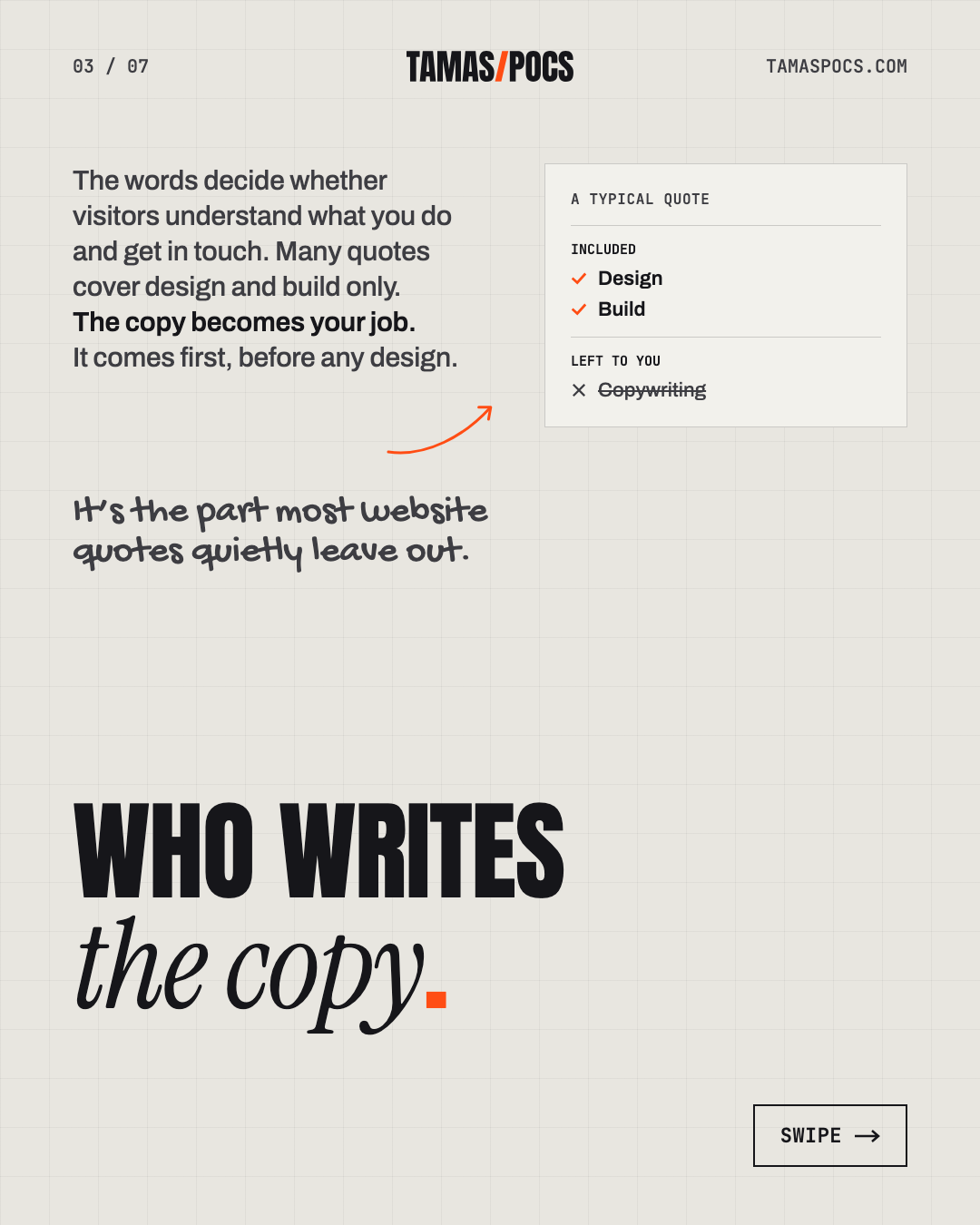
5. Who writes the copy?
Why ask: the words decide whether visitors understand what you do and get in touch. Many quotes cover design and build only. The copy becomes your job.
A good answer: a clear yes or no. If yes, they should explain how they’ll learn enough about your business to write it.
A red flag: “just send us your text when you’re ready.” That usually means late copy, rushed words and redesigned pages.
How I answer: I do. Copywriting is part of every website project. It comes first, before any design.
6. Will I see my real content in the design, or placeholder text?
Why ask: designs filled with “lorem ipsum” look great until the real headline is twice as long as the space.
A good answer: designs built around your actual copy, so what you approve is what goes live.
A red flag: mockups where every block of text is a placeholder.
How I answer: because the copy is written first, you see real pages with your real words.
7. How do I give feedback and approve each stage?
Why ask: unclear feedback rounds are where projects stall. You want to know how changes are requested and when a stage counts as done.
A good answer: one clear way to give feedback and an approval step before moving on.
A red flag: feedback scattered across emails, calls and messages, with no clear sign-off.
How I answer: we meet on Google Meet at the start of each stage. In between, feedback happens in writing, so every comment stays in one place. Each stage ends with your approval.
Price and Timeline
Money and time cause most disagreements, so get them in writing before anything starts.
8. What’s included in the price and what costs extra?
Why ask: two quotes can look very different and turn out to be equal once you add what one of them left out. Copy, photos, extra pages and features are the usual gaps.
A good answer: a written scope that lists pages, features and what’s not included.
A red flag: a single number with no breakdown.
How I answer: my complete website projects start from €2,000. That includes copywriting, custom design and a WordPress build of a typical 5–7-page site. After a short call you get a fixed quote. More pages, features or languages cost more. The quote says exactly how much. I’ve broken down what a website really costs in a separate guide.
9. How do payments work?
Why ask: you want to know when you pay and what you get for each payment.
A good answer: a deposit to start, then payment tied to clear milestones.
A red flag: full payment up front, or no agreement at all.
How I answer: two parts: 50% to start and 50% after the project is closed.
10. How long will it take?
Why ask: a realistic timeline lets you plan launches, campaigns and your own time.
A good answer: a range for your size of project, plus what could slow it down.
A red flag: a promise that sounds too fast for the scope, like a full custom site with copy “next week”.
How I answer: a typical project takes 6–8 weeks. Content that arrives late is one of the most common reasons for delays, so we agree on a schedule before we begin.
11. What do you need from me?
Why ask: your time is part of the project. You should know what you’ll be asked for and when.
A good answer: a short, specific list, given at the start.
A red flag: no list, then repeated surprise requests later.
How I answer: your goals and ideal client, plus two or three sites you like. I’ll also need your logo, brand files and access to your domain and hosting. Photos and testimonials help if you have them. You don’t need a finished brief.
Platform and Ownership
Owners often skip this part. Years later, it’s the part that matters most.
12. Which platform will you build it on?
Why ask: the platform decides what the site can do, what it costs to run and how easily you can move it later.
A good answer: a named platform with reasons that fit your business, not just their own habits.
A red flag: a custom system only they can edit.
How I answer: WordPress with Elementor. WordPress runs 40.2% of all websites (W3Techs, September 2026), so you’ll always find someone who can work on it.
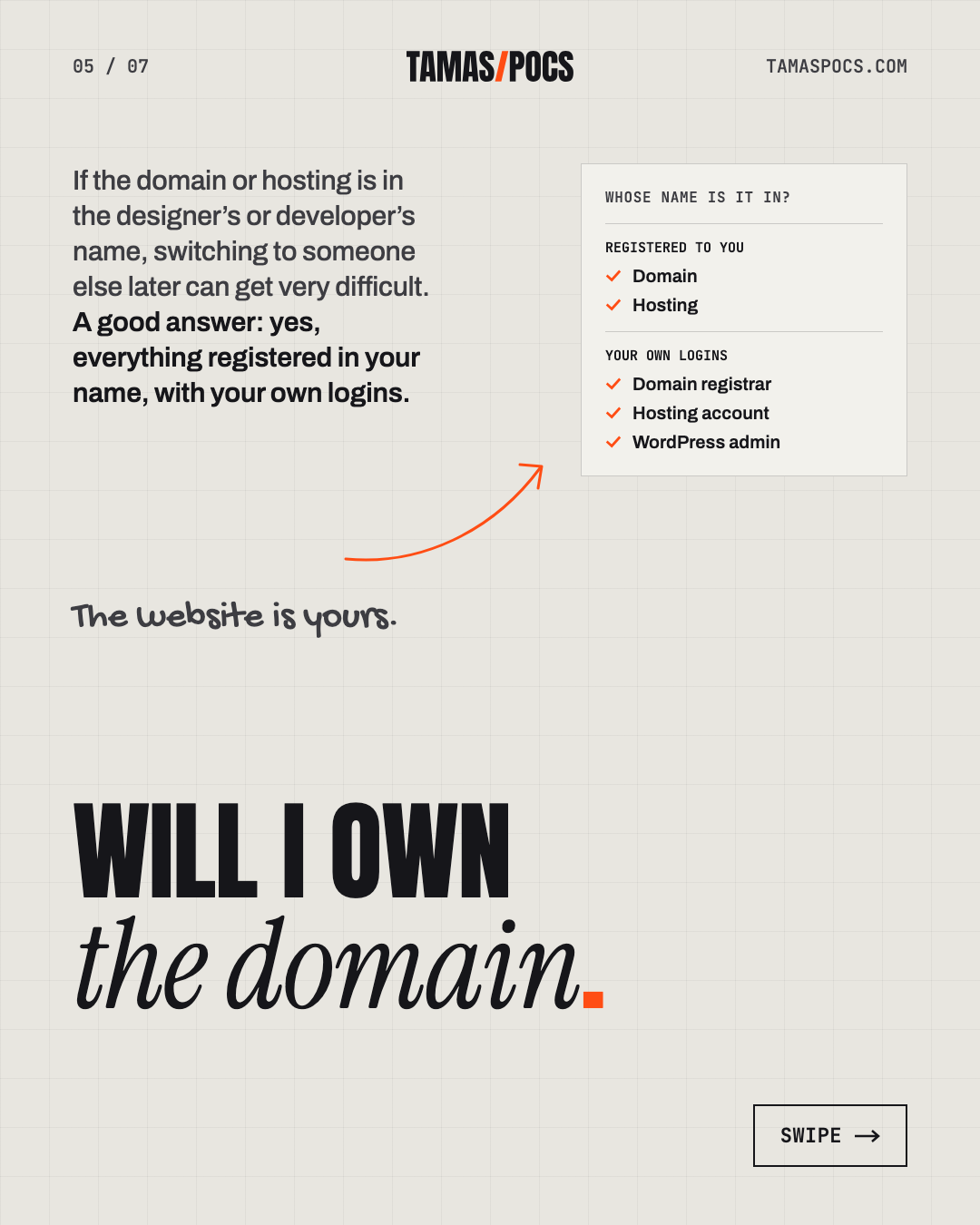
13. Will I own the domain, the hosting and the content?
Why ask: if the domain or hosting is in the designer’s or developer’s name, switching to someone else later can get very difficult.
A good answer: yes, everything registered in your name, with your own logins.
A red flag: “we’ll handle all that for you” with no access for you.
How I answer: yes. The website is yours: you own the domain, the hosting and the content.
14. Will I be able to update the website myself?
Why ask: paying someone for every text change gets expensive and slow.
A good answer: yes, with an editor you can use without code plus a short handover.
A red flag: a site only they can change.
How I answer: yes. Elementor lets you edit text, images and sections without code. We agree up front which updates you’ll make regularly, so the site is structured around them.
15. How will the site work on phones?
Why ask: about half of all web traffic comes from phones. In August 2026 it was 49.36% worldwide (StatCounter).
A good answer: mobile layouts designed on purpose and tested on real screen sizes.
A red flag: “it’s responsive” with no mobile designs to review.
How I answer: I design every page for desktop and mobile. You review both before anything is built.
After Launch
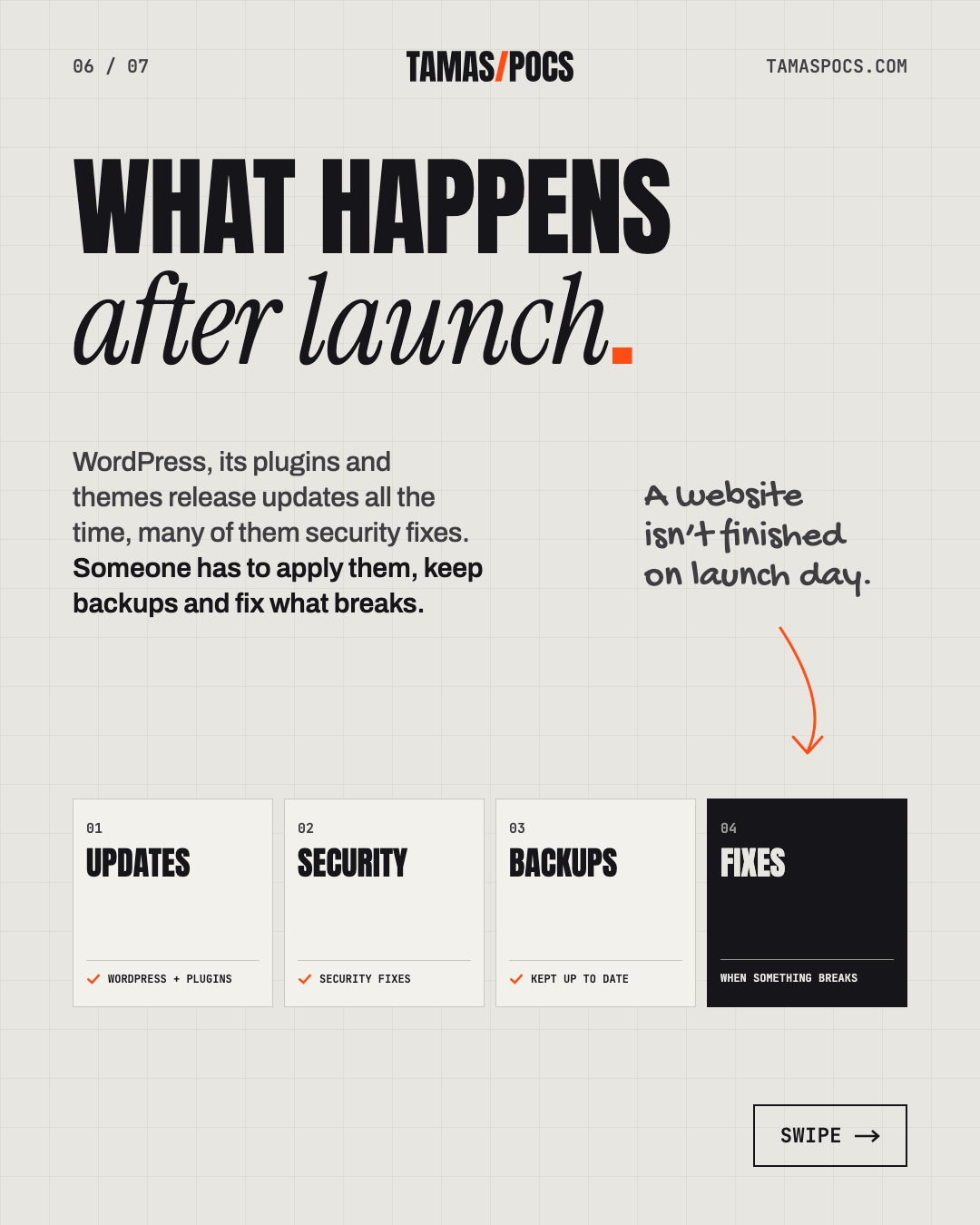
A website isn’t finished on launch day. Ask what happens next.
16. What happens after launch?
Why ask: WordPress, its plugins and themes release updates all the time, many of them security fixes. Someone has to apply them, keep backups and fix what breaks.
A good answer: a clear offer for ongoing care, with what’s included and what it costs.
A red flag: “you won’t need anything.” Every WordPress site does.
How I answer: you can look after the site yourself, or choose my maintenance plan for €50 a month, with no contract. It covers updates, backups, security monitoring, bug fixes and a monthly report. Here’s everything WordPress maintenance includes.
17. How do we communicate and how fast do you reply?
Why ask: slow replies can turn a six-week project into a four-month one.
A good answer: a stated reply time and a clear main channel.
A red flag: no answer, or a first reply that already took a week.
How I answer: I reply within 1 business day. I work remotely with clients in Hungary, across Europe, the UK and the US.
How to Compare the Answers
Once you’ve asked the same questions to two or three designers or developers, put their answers side by side. Don’t just compare the prices. Look at:
- What’s included. Especially the copy, the number of pages and what happens after launch.
- Who does the work. One accountable person or a hand-off between specialists.
- Ownership. Whether everything ends up in your name.
- How they answered. Clear, specific answers are a good sign for the whole project.
Most owners don’t build their own website. In a 2025 Clutch survey of 406 US small-business owners, only 8% built their own and 45% used an outsourced partner (Clutch, August 2025). Choosing that partner well is worth an hour of questions.
For the bigger picture, from budget to launch, see my guide to getting a website for your service business.
📌 Save it for later
Download these 17 questions, with the good answers and red flags, to use when you talk to web designers or developers.
Frequently Asked Questions
How do I hire a web designer or developer?
Shortlist two or three designers or developers whose live work you like. Ask each the same questions about process, copy, price, ownership and support. Choose the one whose answers are clear, specific and in writing.
What should I ask a web designer or developer before hiring?
Ask who does the work, who writes the copy and what’s included in the price. Also ask how payments work, who owns the domain and hosting and what happens after launch.
Should I hire a freelancer or an agency?
A freelancer suits owner-led businesses that want one accountable person. An agency suits bigger projects that need a whole team. The questions in this guide work for both.
What are red flags when hiring a web designer or developer?
No live examples, vague answers about who does the work and no written scope. The domain registered in the designer’s or developer’s name is another one, as is a missing plan for after launch.
Your Next Step
You can ask me every one of these questions. Tell me about your business and what you want your website to do. I’ll reply within 1 business day.
Tamas Pocs is a freelance web designer and WordPress developer based in Hungary. For 5+ years he has written, designed and built websites for service businesses (more than 50 so far) and looked after them once they’re live. See his work or connect on LinkedIn.