Mrs. Kitty’s Pasta Cottage has a simple idea: people come together, make fresh pasta by hand and enjoy it over a shared meal.
When Kitty Balogh launched the business, she needed a website that did two things. It had to help people find her. It also had to take registrations without her spending her evenings answering messages.
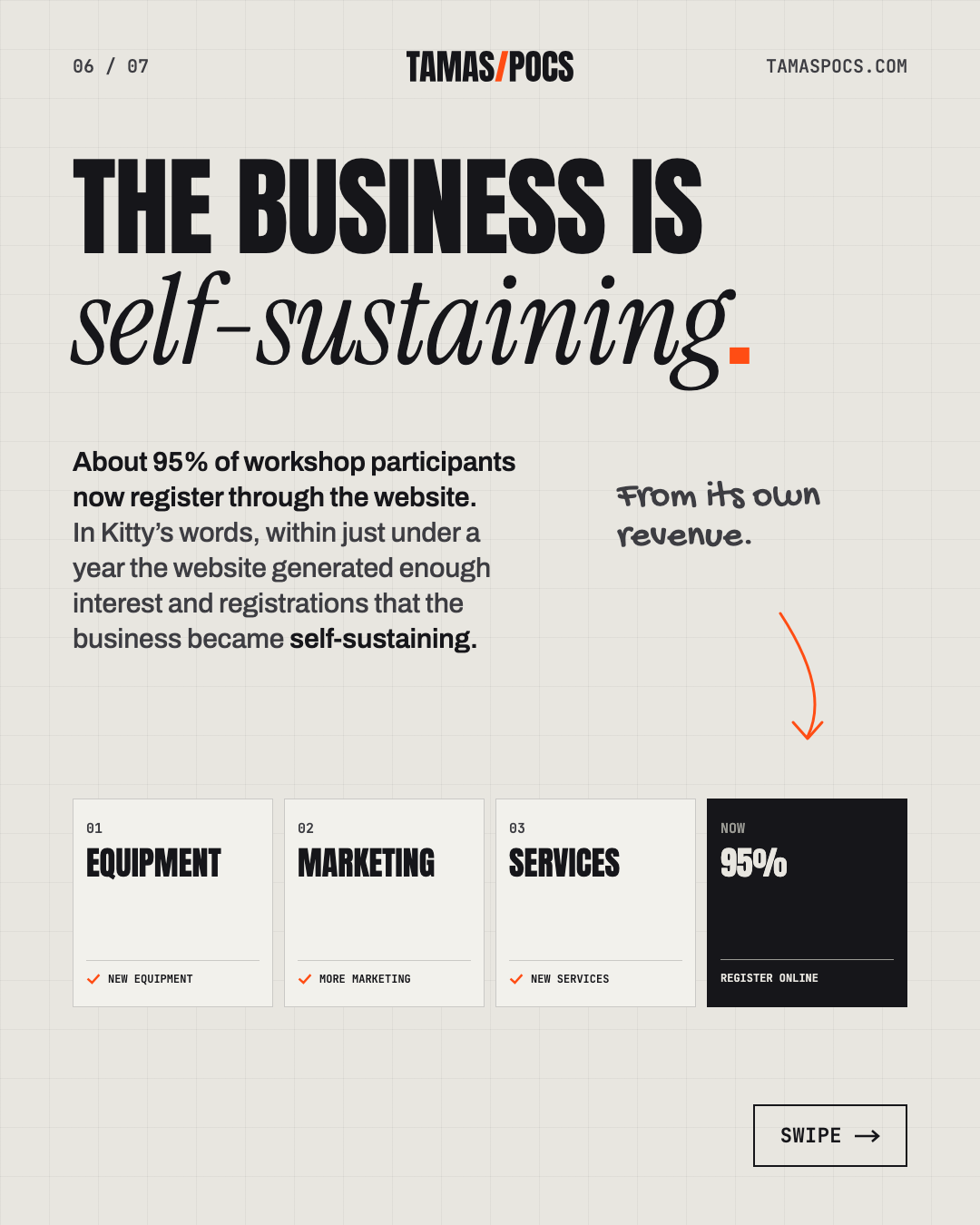
Today, about 95% of her workshop participants register through the website. Within a year, the business became self-sustaining. This is how we got there, step by step.
Key Takeaways
- About 95% of workshop participants now register through the website.
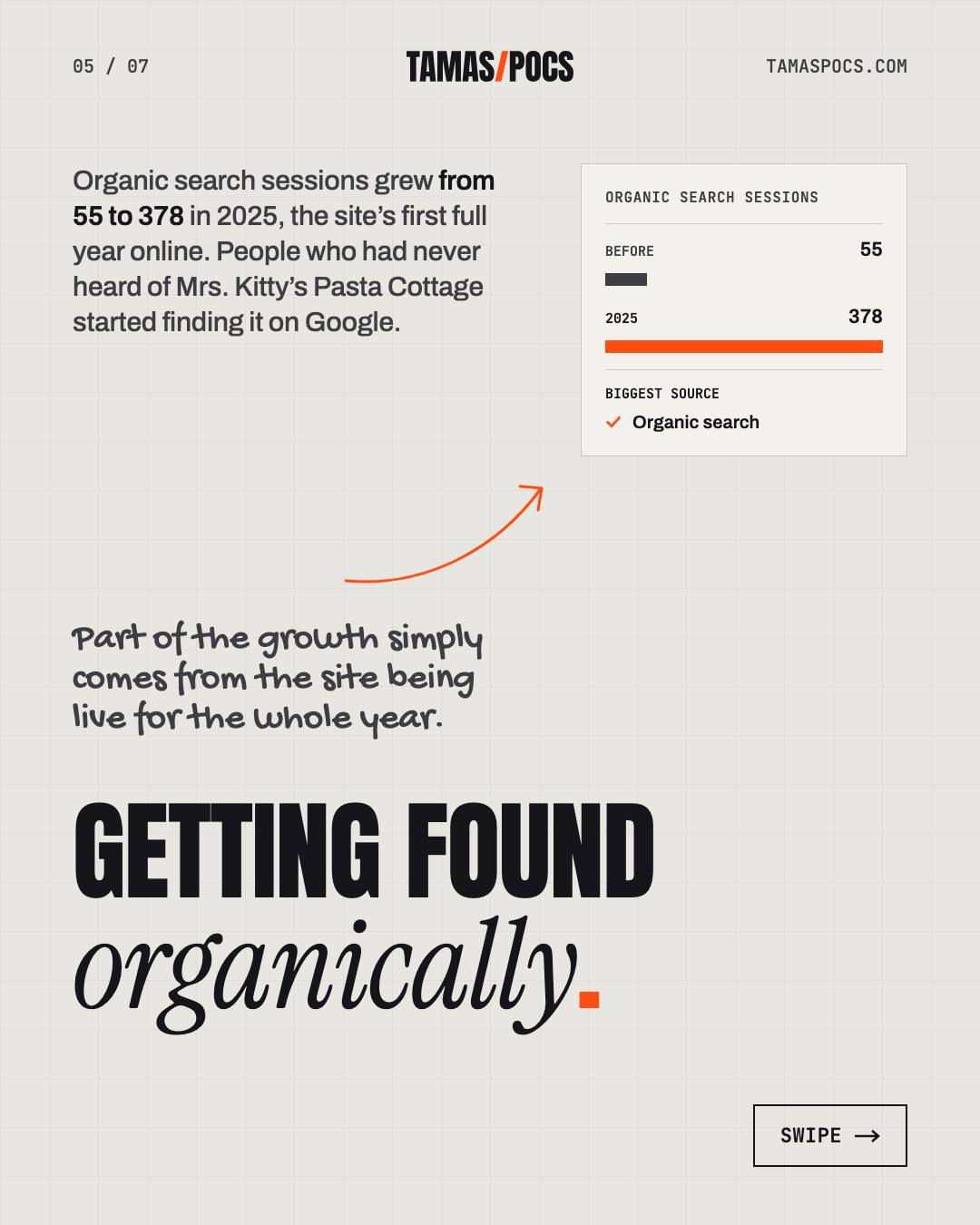
- Organic search sessions grew from 55 to 378 in 2025, the site’s first full year online.
- Within just under a year, the business became self-sustaining, funding new equipment, marketing and services from its own revenue.
- The site started small as a landing page with a blog. It grew into a full booking website without starting over.
- A Google Business Profile, set up on day one, now shows a 5.0 rating from 20 reviews that work hand in hand with the website.
The Client
Kitty Balogh runs pasta-making workshops and cooking evenings in Hungary. Everything is handmade, from a traditional ten-egg recipe, with ingredients from local producers.
Her offer grew over time:
- Workshops for traditional, colored, filled and gluten-free pasta
- Private events, from couples’ dates to family programs
- Corporate team building
- Kids’ camps: playful, hands-on cooking sessions for children
- Gift vouchers
- Handmade pasta and gift packages
Kitty and I had worked together before. When she launched her business, she asked me to build the website.
The Starting Point
A new business has no reputation online yet. Nobody searches for your name, because nobody knows it.
Kitty’s challenge was typical for a small service business:
- Getting found by people looking for pasta-making or cooking experiences, not just friends and followers.
- Explaining the offer clearly. Several workshop types, private events and vouchers can easily confuse a first-time visitor.
- Taking registrations without a constant back-and-forth of messages about dates, prices and places.
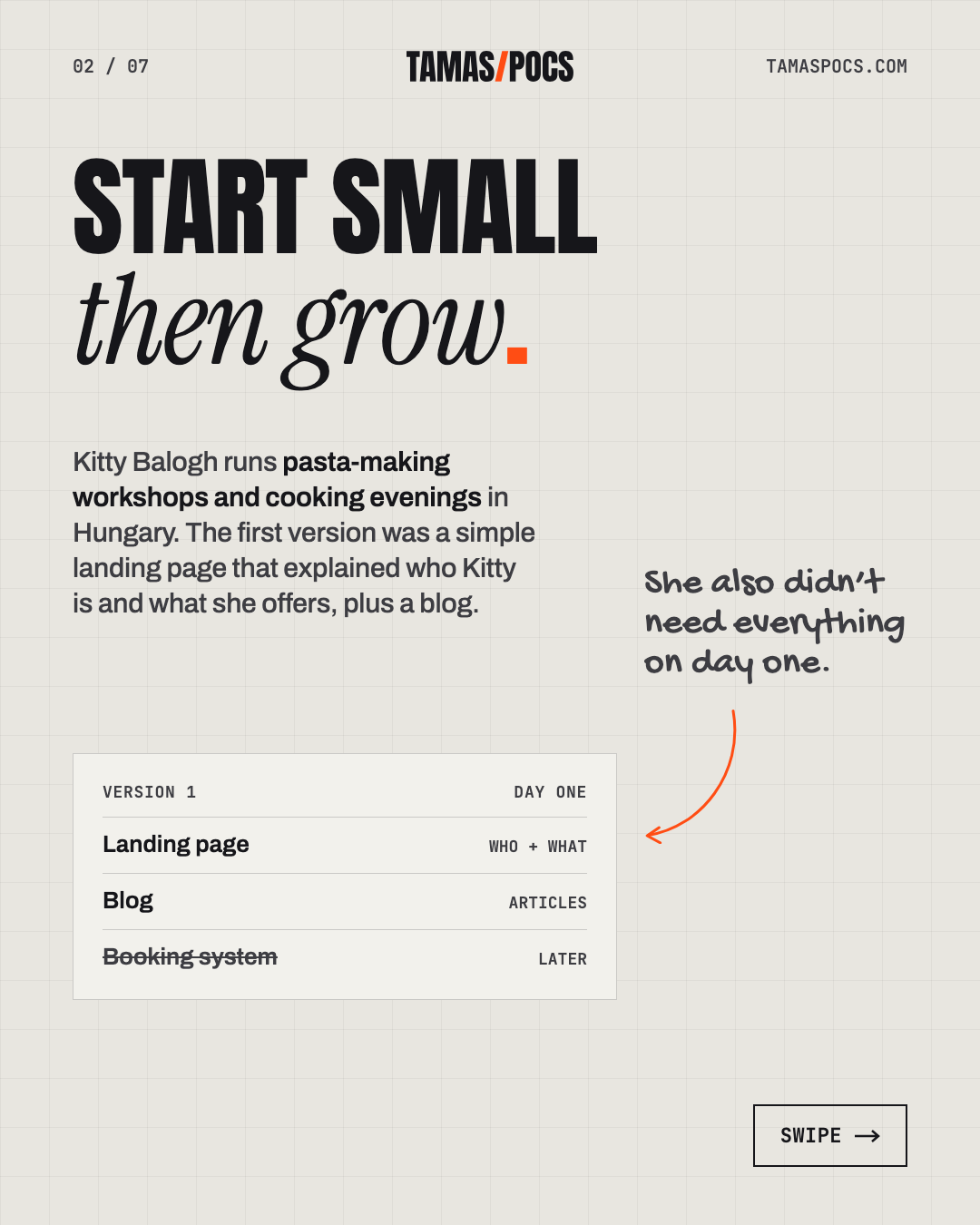
She also didn’t need everything on day one. The business was just starting, so the website had to be able to grow with it.
The Approach: Start Small, Then Grow
We built the site in two phases. That’s what I mean by a website built to flex: it grows with the business instead of being replaced.
Phase 1: a landing page with a blog. We started working together in late 2024. The first version was a simple landing page that explained who Kitty is and what she offers, plus a blog. It gave the business a professional home online and a place to start building search visibility.
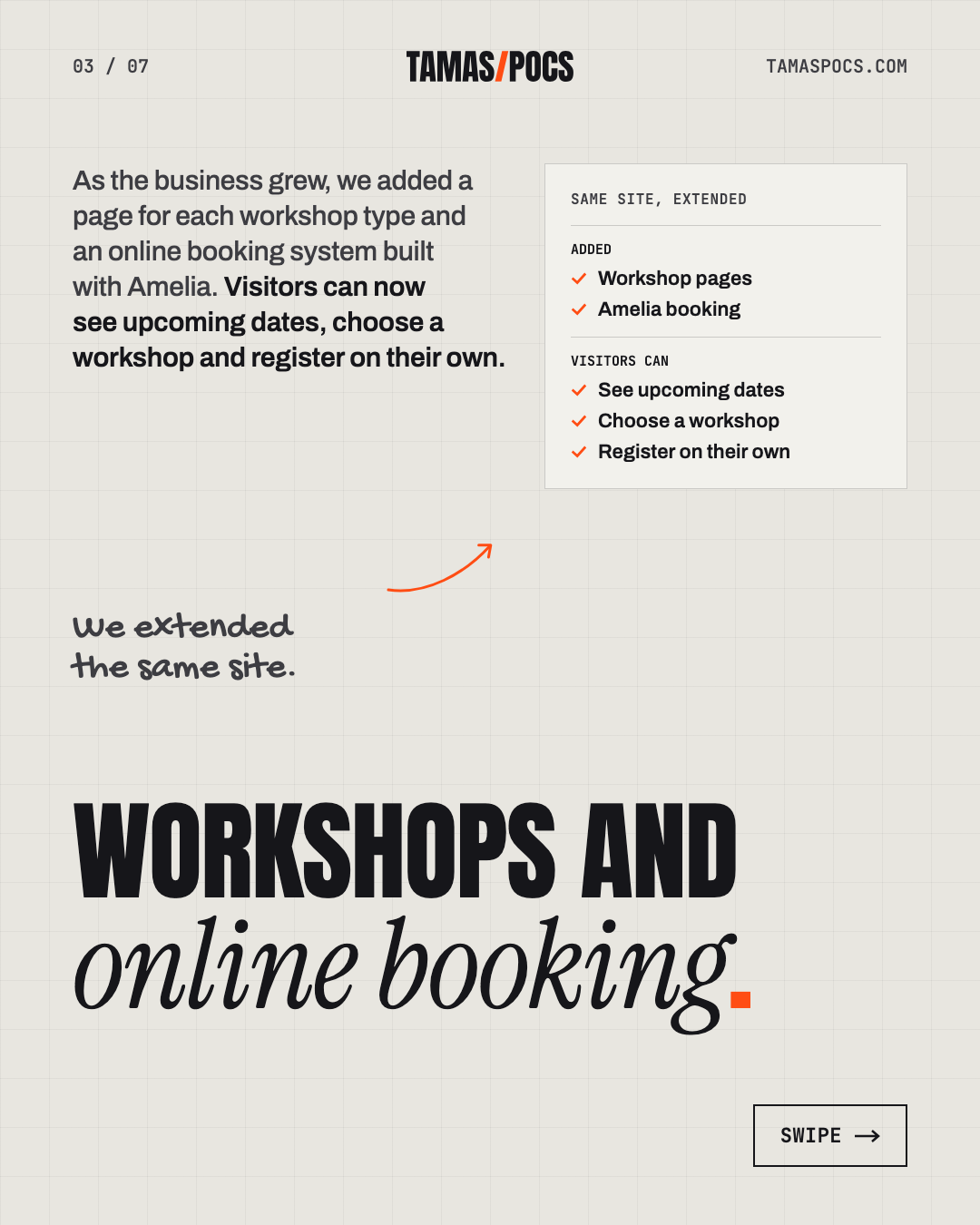
Phase 2: workshops and online booking. As the business grew, we added a page for each workshop type and an online booking system built with Amelia. Visitors can now see upcoming dates, choose a workshop and register on their own.
Because the site runs on WordPress and Elementor, phase 2 didn’t mean a rebuild. We extended the same site.
What I Built
I handled the whole project: copywriting, design, development and now ongoing maintenance.
- Copy that answers questions before they’re asked. Each workshop page states what you’ll make, the price, how long it takes, the group size and where it happens. Visitors can decide without writing first.
- A clear structure for a growing offer. Workshops, private events, team building, vouchers and a gallery each have their own place in the menu.
- Online booking. Upcoming dates and registration run through Amelia, so a visitor can go from reading to booked in one visit.
- A Google Business Profile. I set it up at the very start, so Kitty could collect Google reviews from day one.
- A design that feels like the business: warm, personal and built around real photos of Kitty and her workshops.


You can see the live site at kittypastacottage.hu.
Google Reviews: The Website’s Partner
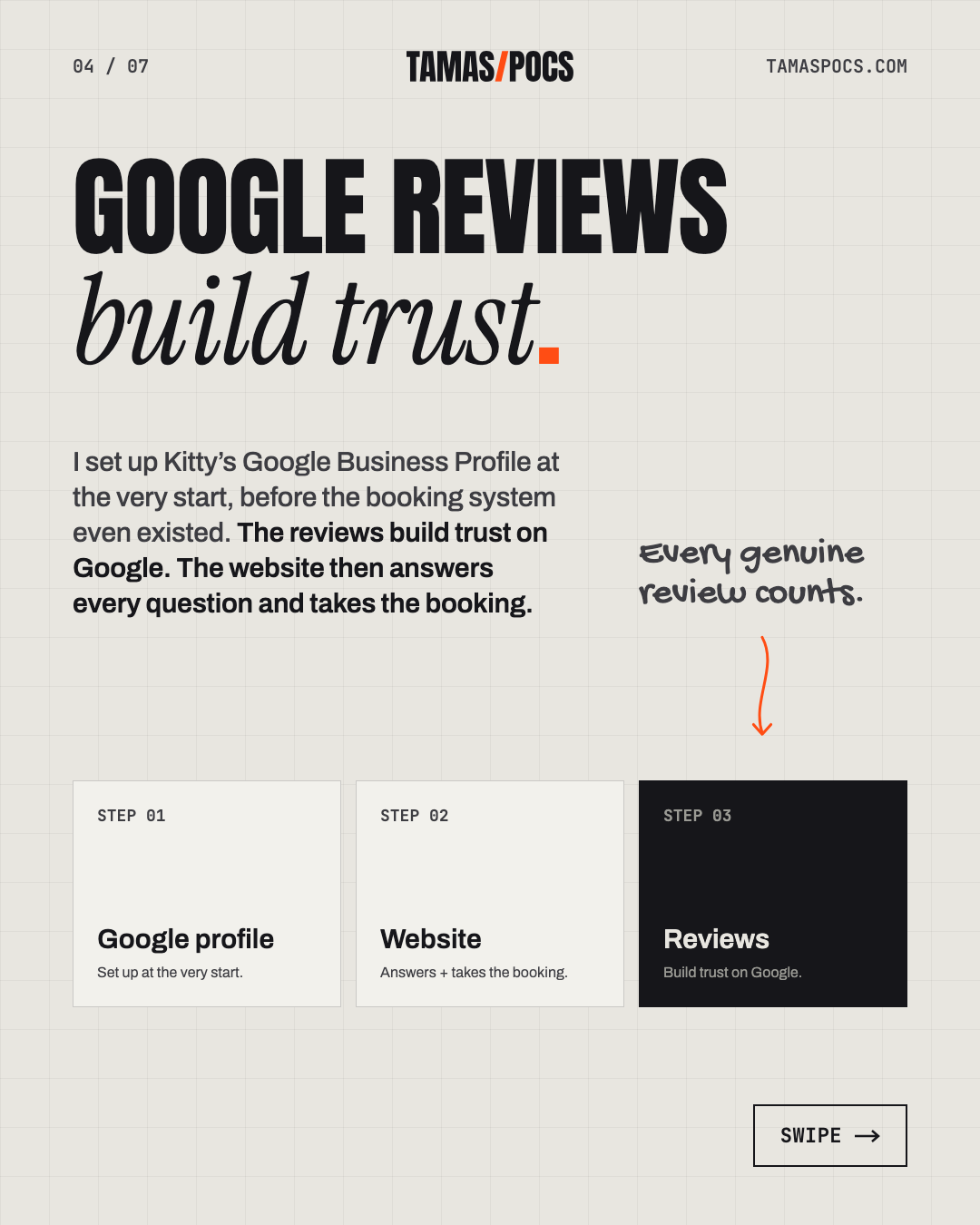
A website tells people what you offer. Reviews tell them whether to trust it. That’s why I set up Kitty’s Google Business Profile at the very start, before the booking system even existed.
Every happy participant became a chance for a new review. In Kitty’s experience, those reviews played a big part in the business’s success. The reviews build trust on Google. The website then answers every question and takes the booking.
The two are connected on the website too. Kitty’s homepage has a section that shows her Google reviews directly, so visitors see what other participants said without leaving the page.
This matches what surveys find. BrightLocal surveyed 1,002 US consumers in 2026: 54% check a business’s website after reading positive reviews, up from 32% in 2019 (BrightLocal, Local Consumer Review Survey 2026).
Today Kitty has a 5.0 rating from 20 Google reviews. That’s not hundreds, but it’s a small business that only started at the end of 2024. For a new business, every genuine review counts. Each one sends people to a website that’s ready to take their booking.
The Results
The headline result comes from Kitty herself: about 95% of workshop participants now register through the website.
The analytics show where those visitors come from. Comparing 2025 with 2024 in Google Analytics:
| Metric | 2025 | Change vs 2024 |
|---|---|---|
| Active users | 499 | +168% |
| Sessions from organic search | 378 | +587% |
| Sessions from Google | 345 | +527% |
| New users from organic search | 203 | +1,028% |
| Sessions from organic social | 263 | +42% |
| Sessions from direct visits | 161 | +127% |
Source: Google Analytics for kittypastacottage.hu, 1 January–31 December 2025 compared with 2024. Shared with the client’s permission.
A note on the numbers: they’re small, because this is a small local business. 2025 was also the site’s first full year online. Part of the growth simply comes from the site being live for the whole year. What matters is the shift: search became the largest source of visitors, ahead of social media. People who had never heard of Mrs. Kitty’s Pasta Cottage started finding it on Google.
The business result goes further than traffic. In Kitty’s words, within just under a year the website generated enough interest and registrations that the business became self-sustaining.
What Kitty Says
“Since launching the website, interest in my services has noticeably increased—many more people find me and I have become more accessible to those specifically looking for programs of this kind. The vast majority of workshop participants—approximately 95%—now register through the website. This has made the organization process significantly easier and more automated while freeing up valuable time for me in the process.”
“During our collaboration of just under a year, the website has generated such an increase in interest and registrations that my business has now become self-sustaining. My improvements—such as purchasing new pasta-making equipment, launching marketing campaigns and introducing additional services—are now funded by the revenue the business generates.”
— Kitty Balogh, owner of Mrs. Kitty’s Pasta Cottage
After Launch
The website is on my maintenance plan. I keep WordPress, the theme and the plugins up to date, check the site after every update and send a monthly report. For a site that takes bookings, a broken form would mean lost registrations, so the check after every update matters.
What Your Business Can Take From This
You don’t need a pasta workshop for this to apply. Four lessons carry over to most service businesses:
- Start with what you need now. A simple, well-written site is enough to launch. Add features when the business needs them.
- Answer the practical questions on the page. Price, length, location and what’s included. Every answered question is one less message before someone books.
- Build on a platform that can grow. Phase 2 was an extension, not a rebuild, because the first version was built to be extended.
- Pair the website with reviews. Set up a Google Business Profile early and ask happy clients for reviews. Reviews build trust. The website turns that trust into bookings.
If you’re planning your own site, my guide to getting a website for your service business walks through the whole process.
Your Next Step
Want a website that grows with your business, the way this one did? Tell me about your business and what you want your website to do. I’ll reply within 1 business day.
Tamas Pocs is a freelance web designer and WordPress developer based in Hungary. For 5+ years he has written, designed and built websites for service businesses (more than 50 so far) and looked after them once they’re live. See his work or connect on LinkedIn.